


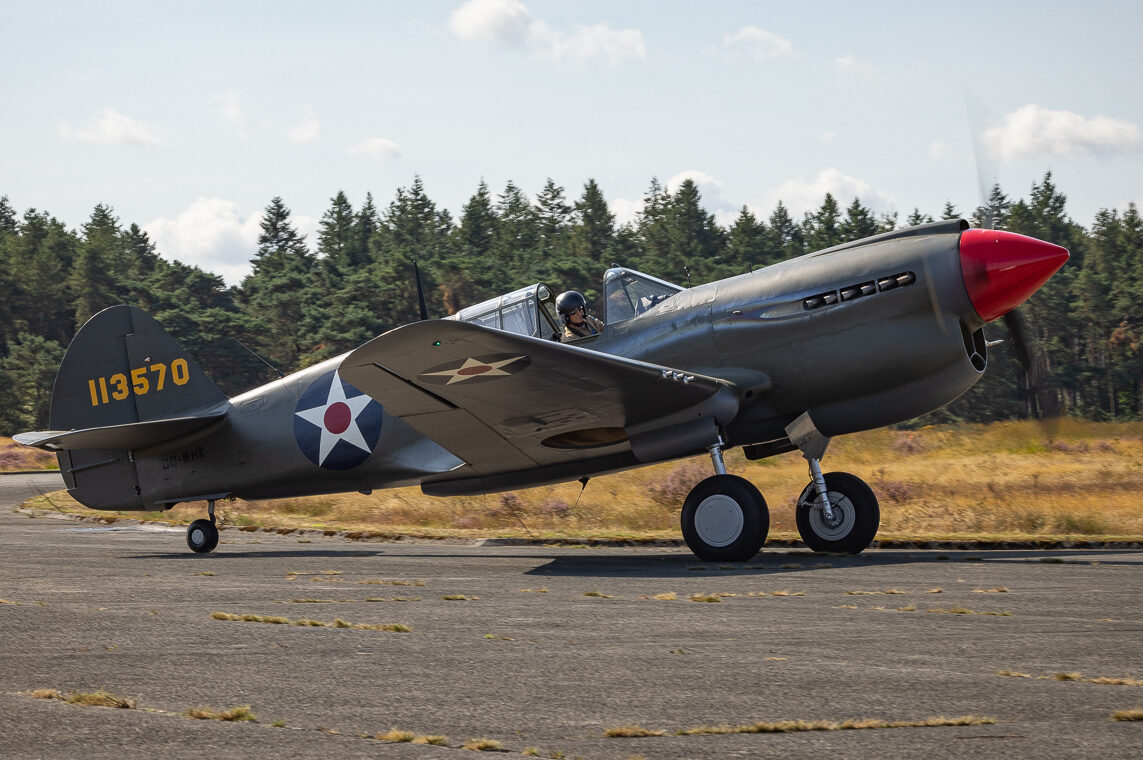
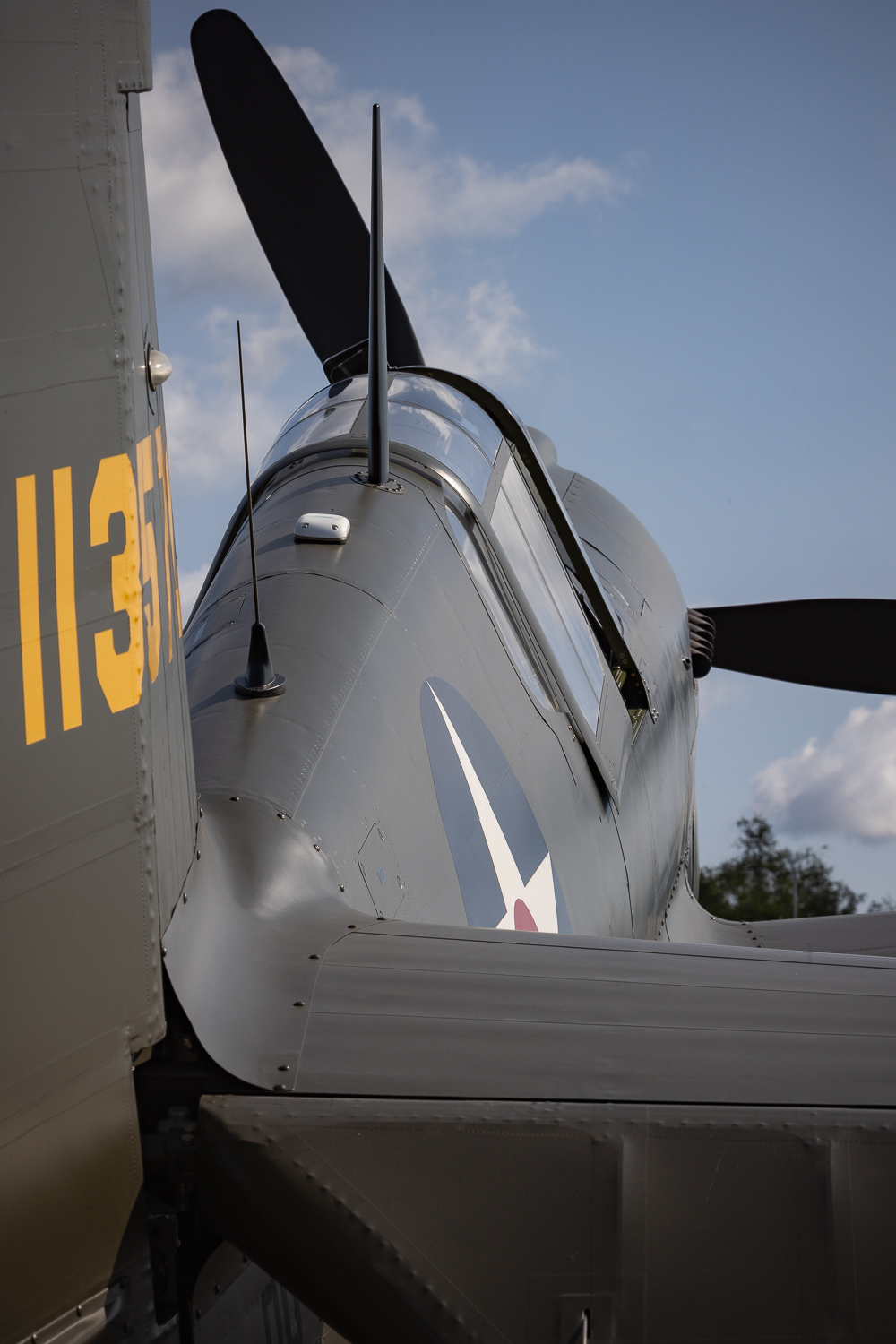
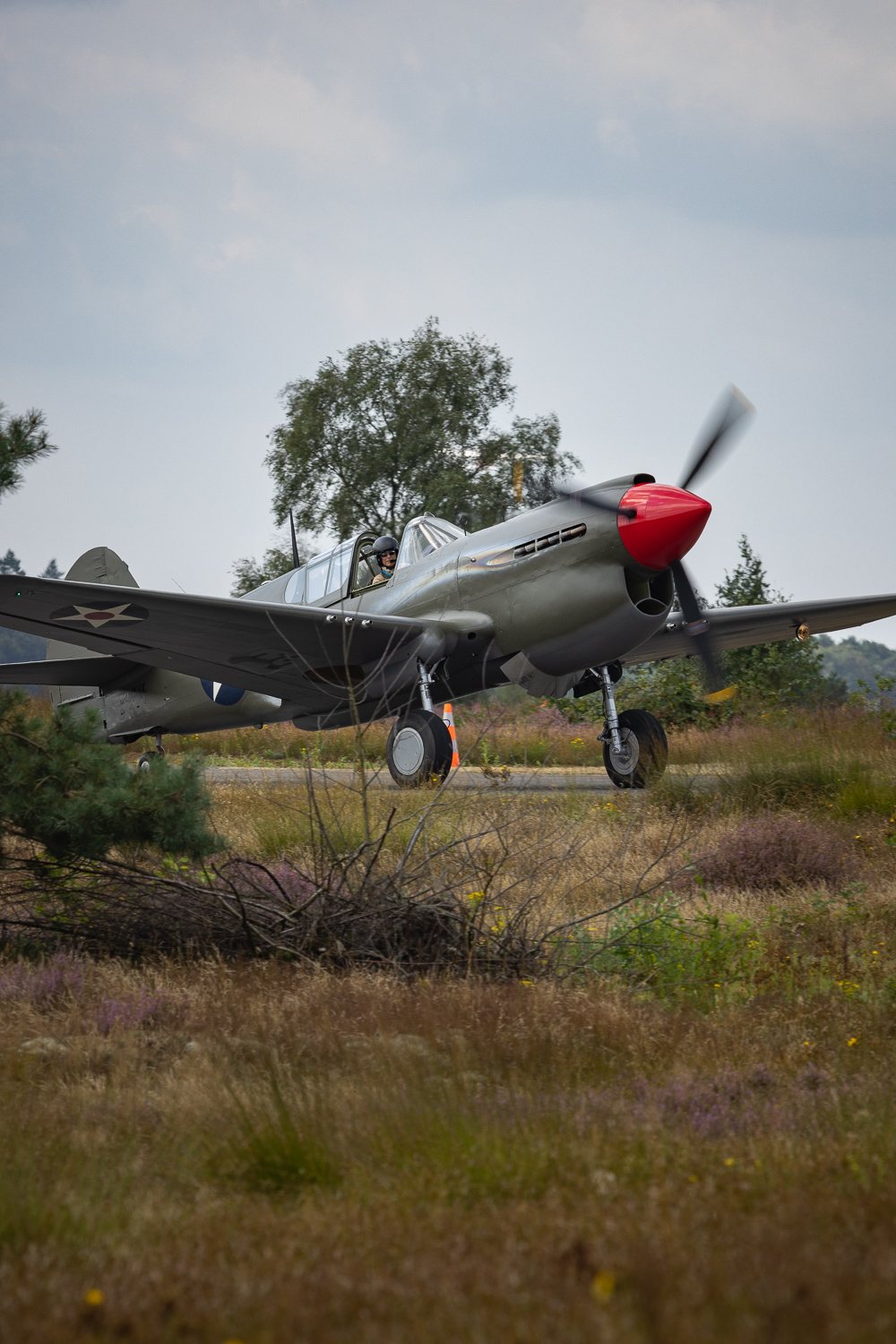
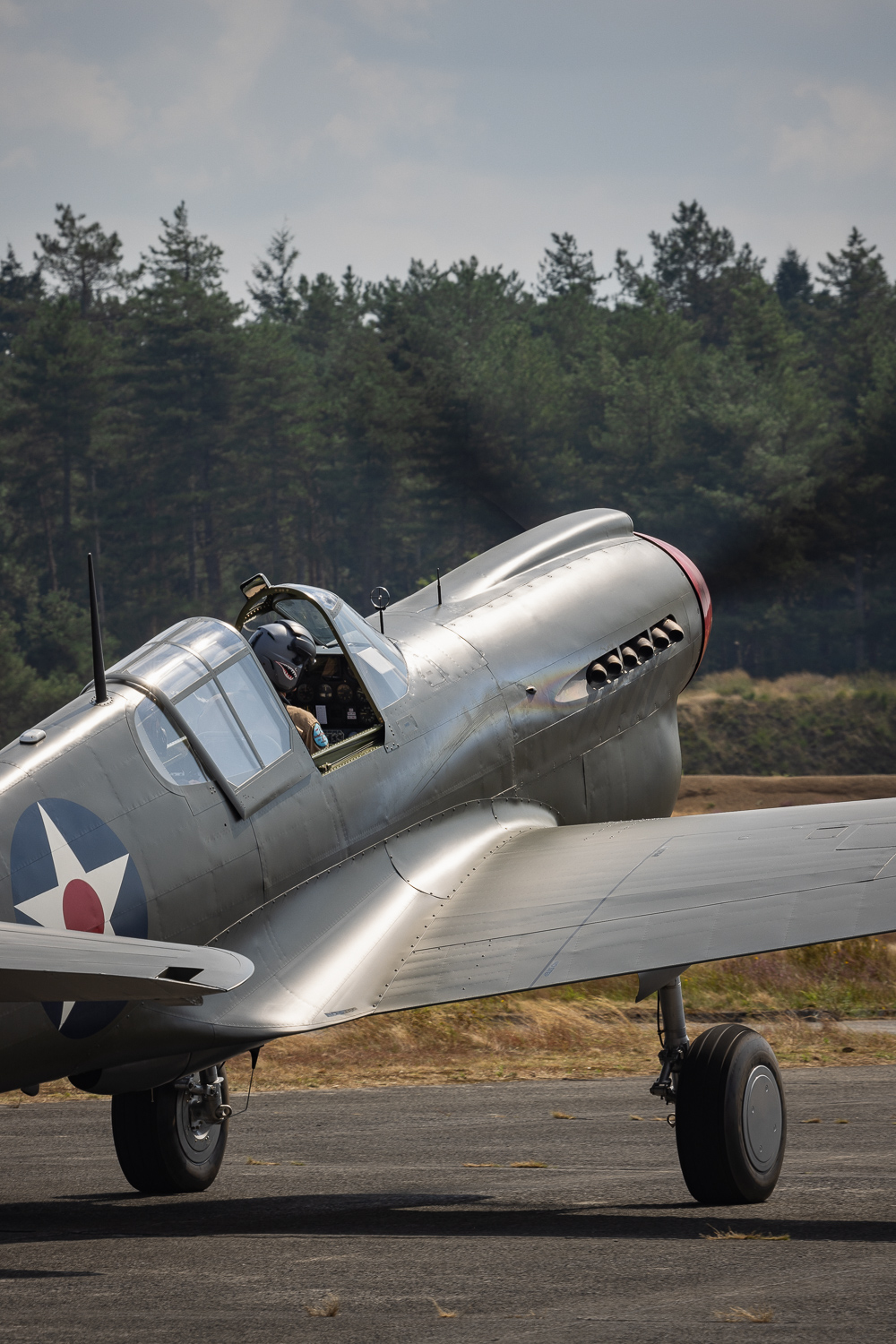
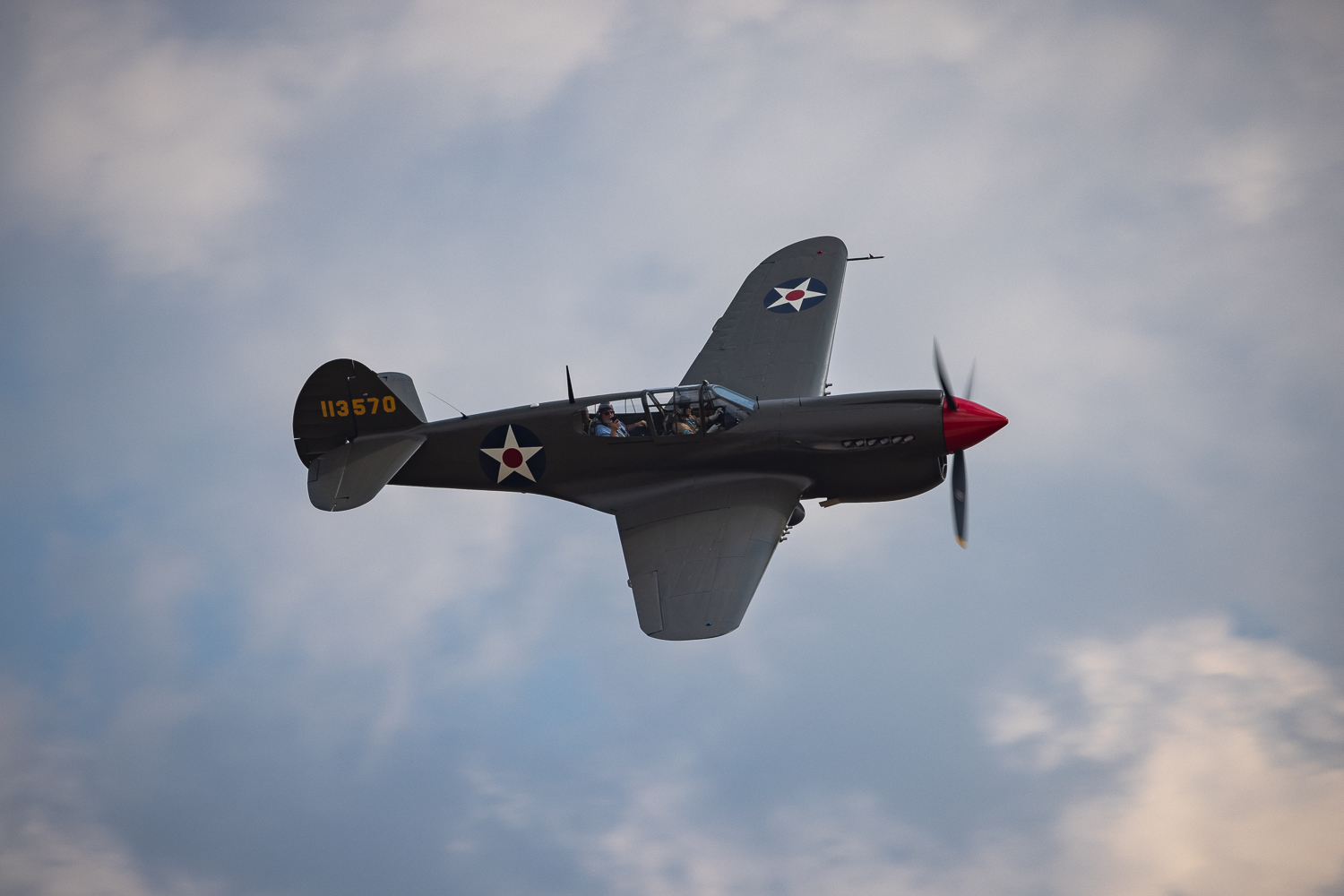
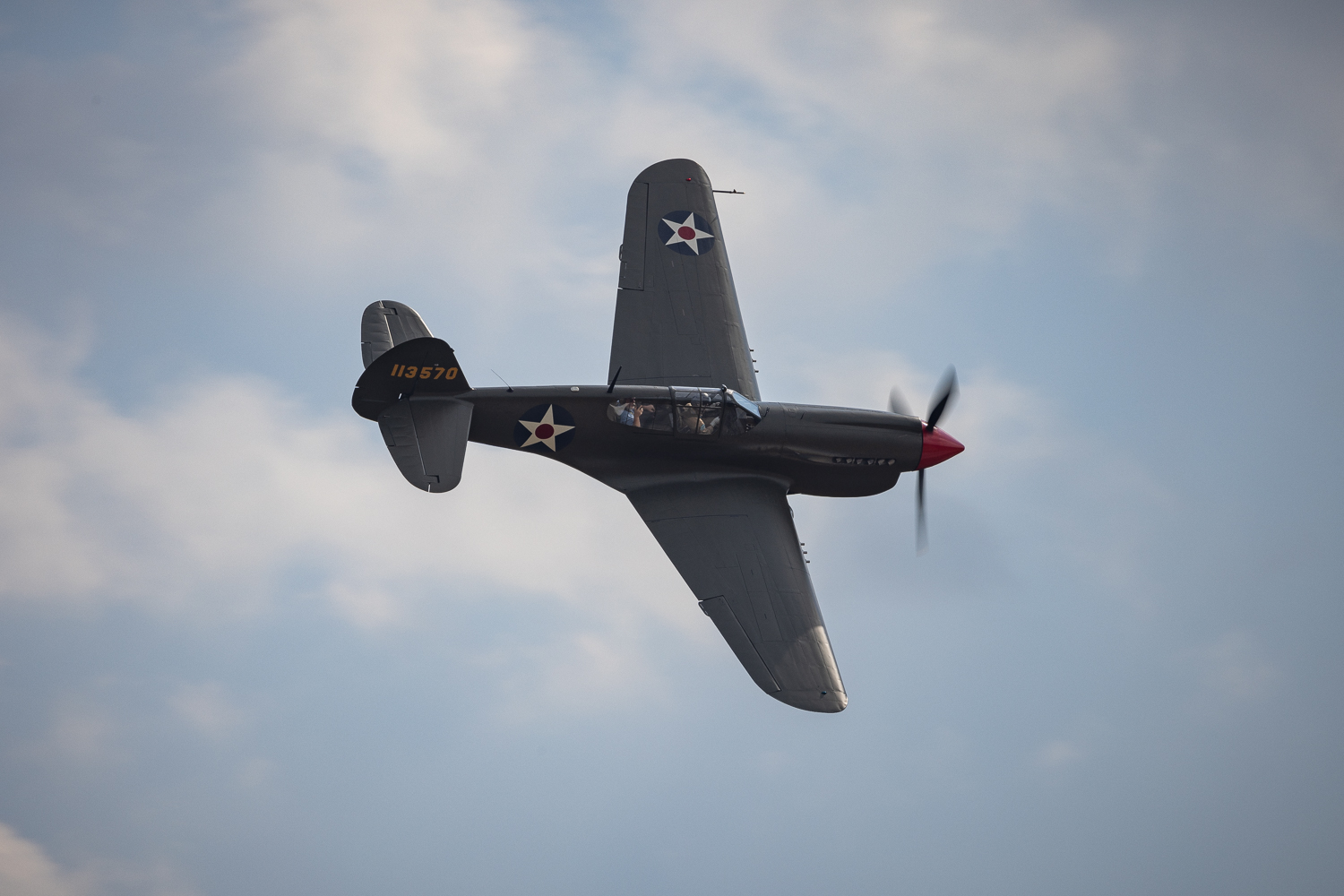
An iconic symbol of the Second World War, the Curtiss P‑40E will bring the skies to life at our event with an exceptional flying display. Instantly recognisable thanks to its famous shark mouth, this legendary fighter embodies both the robustness and effectiveness of the aircraft that took part in the major aerial campaigns of the conflict.
A veteran of the Second World War
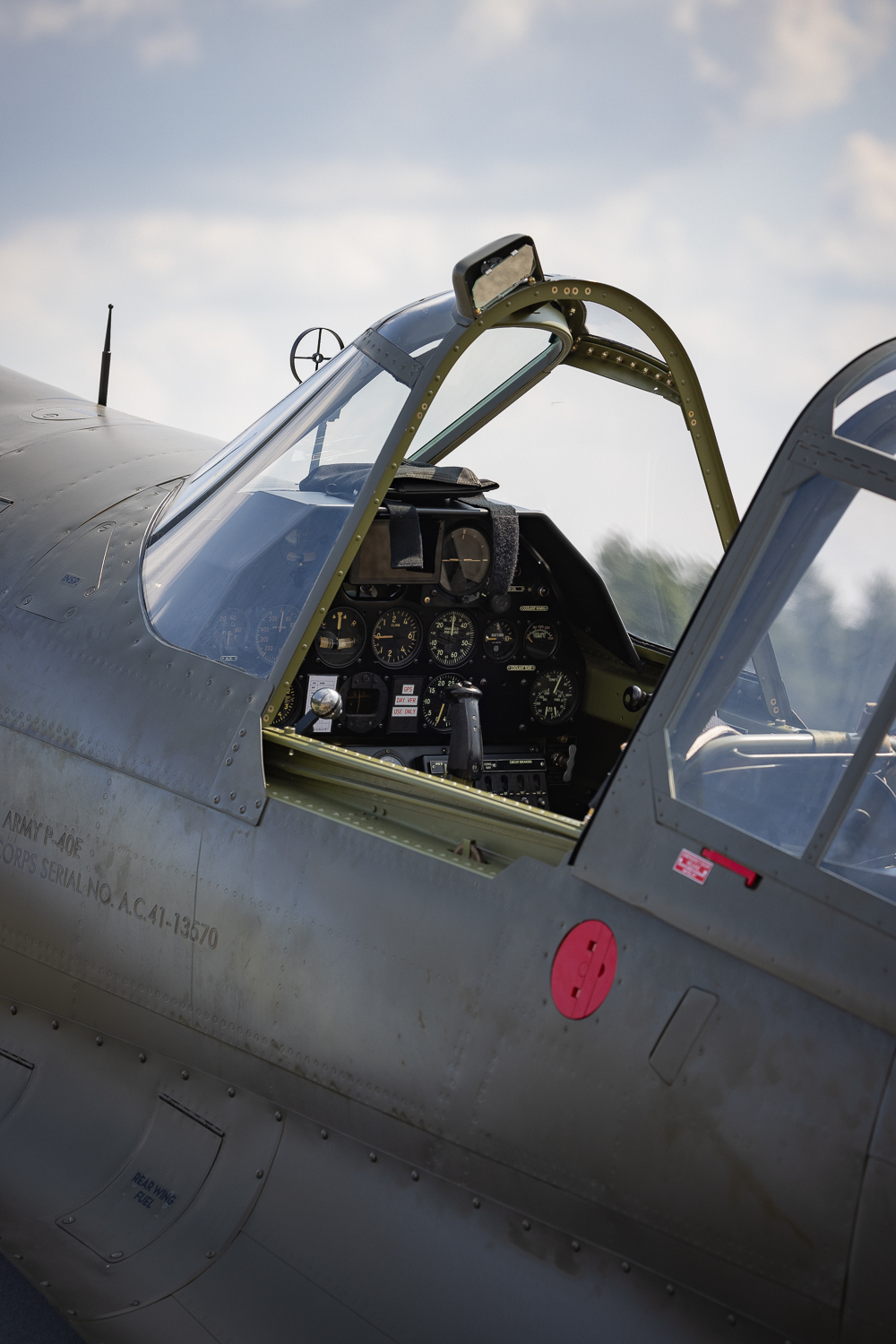
Introduced into service at the end of 1941 with the US Army Air Forces, this aircraft, originally registered as #41‑13570, was quickly transferred to the Soviet Union under the Lend‑Lease program. Integrated into the 20th Guards Fighter Aviation Regiment, it took part in the strategic defence of the Murmansk region and the Kola Peninsula.
On June 1st, 1942, piloted by Lieutenant A. V. Pshenev, this P‑40E took part in an escort mission alongside other Allied fighters to protect Soviet bombers engaged in an attack against a German airfield. Like many aircraft of the era, it was shot down in 1942, temporarily marking the end of its operational career.
A remarkable restoration
The story of this aircraft does not end there. After spending more than 50 years at the bottom of a lake in Russia, the aircraft was recovered and beautifully restored, regaining its original appearance and capabilities.
Today, this P‑40E is maintained in airworthy condition according to the highest maintenance standards and now flies under the Belgian registration OO‑WHK. It is flown by its owner, Bernard Van Milders, an aviation enthusiast dedicated to preserving aeronautical heritage.
A highlight of the flying display
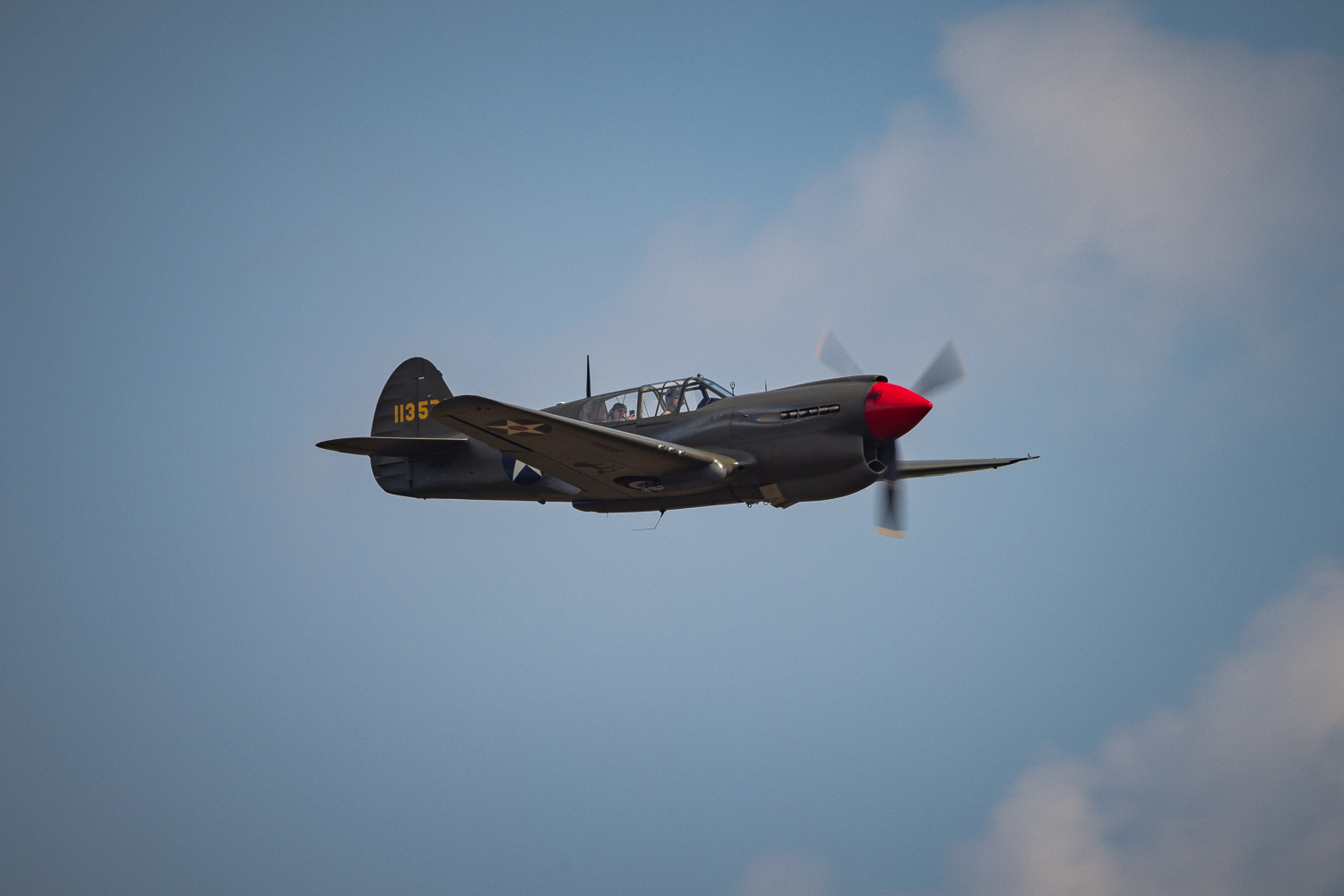
During the BAFDAYS, this historic fighter will offer the public an emotional flying display, combining historical authenticity with the elegance of warbirds. Powered by its Allison V‑1710 engine, the P‑40E stands out for its remarkable flight characteristics, reflecting the aeronautical expertise of its era.
Its presence in the flying display offers a true journey into history, allowing spectators to see in motion an aircraft that has endured the battles of the Second World War and stood the test of time.
Comments are closed