
Origins
The SV‑4 is a training biplane designed in the 1930s by Stampe and Vertongen at their factory in Antwerp‑Deurne, now home to a flying museum. The initial model, the SV‑4A, was intended for advanced training and aerobatics. It was soon improved into the SV‑4B, featuring redesigned wings and a 130 hp de Havilland Gipsy Major engine.
Production
Before the Second World War, only 35 aircraft were built, with production halted due to the conflict. After the war, Stampe and Renard resumed manufacturing between 1948 and 1955, producing 65 additional aircraft used for initial training in the Belgian Air Force.
Career and Use
The SV‑4 was highly appreciated for its stability and maneuverability, making it ideal for pilot training. In 1965, it was also used by the “Manchots” aerobatic team, known for their mirror formation displays.
It later continued its service as a glider tug for the Air Cadets until its retirement from military service in 1975.
Legacy
Robust and well‑designed, the Stampe SV‑4 has stood the test of time: about half of all SV‑4B aircraft built still exist today, many of them still airworthy.
The OO‑MON
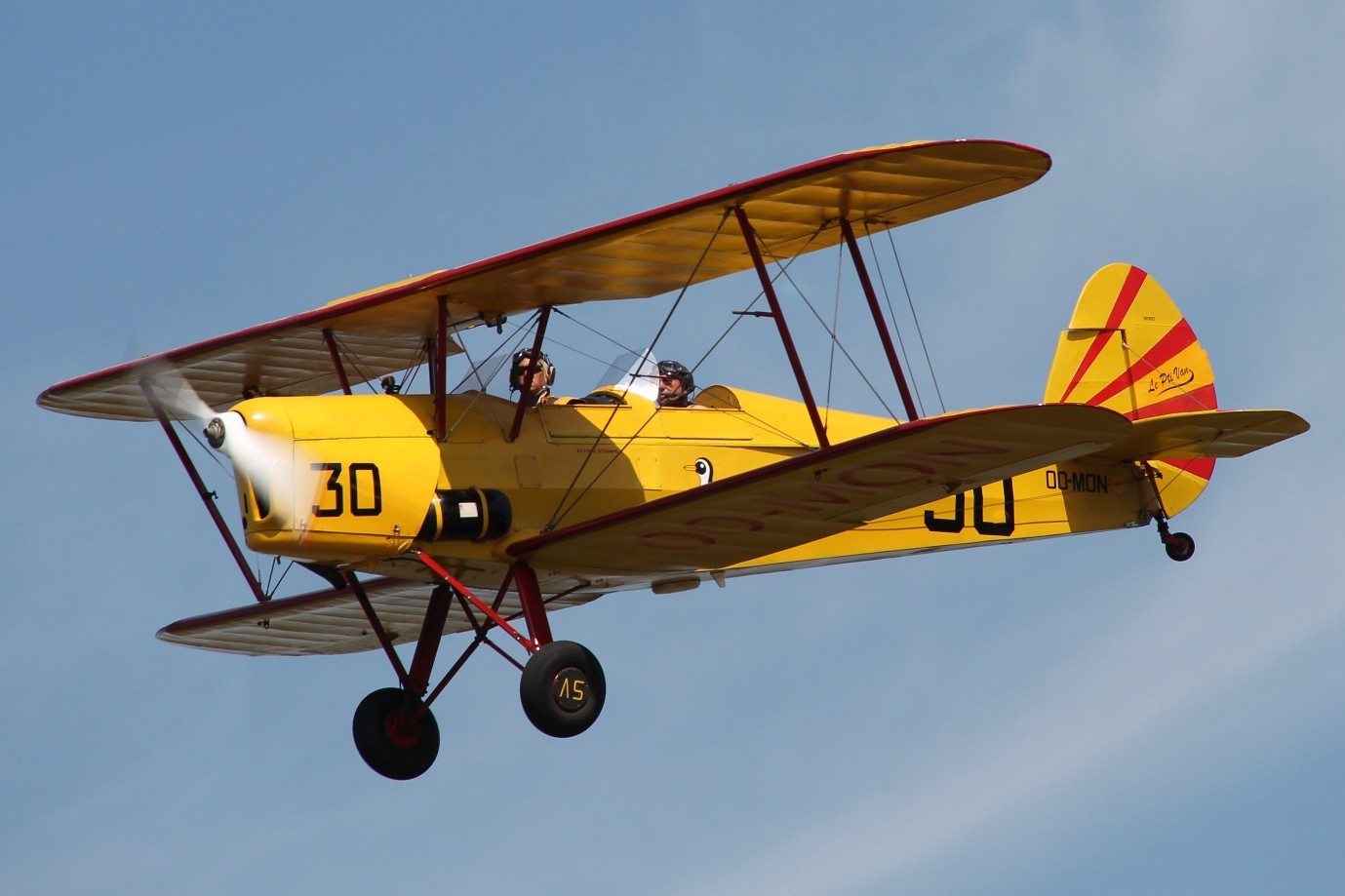
The OO‑MON, a former Belgian Air Force V30, is owned by Guy Van Eeckhoudt and flown by his son, LTC “Oli” Van Eeckhoudt. It bears the inscription « Le P’tit Van »on its tail, in tribute to Albert Van Eeckhoudt, a Spitfire pilot in the 350th Squadron during the Second World War.
Comments are closed